Open a packet of instant soup or scoop protein powder for a morning shake, and the equipment behind it never crosses your mind. Somewhere upstream, a ribbon mixer did the work — and on a food line, that mixing stage is what decides whether every pack tastes the same.
Mixing isn’t as simple as it looks
Food manufacturers run into three persistent problems when blending powders. They are the reason a food line is specified around the mixer rather than assembled from whatever is available.
Clumping
Flour, milk powder and protein isolates stick together. If they are not properly dispersed, those clumps end up in the finished pack.
Inconsistent blends
A little too much salt here, not enough sugar there. At thousands of packs, small variations become quality issues — and for vitamins and minerals below 1% of the mix, even distribution is a regulatory requirement.
Slow, inconsistent production
Manual mixing is labour-intensive, slow, and varies from operator to operator. Industrial food production needs speed and repeatability.
How a ribbon blender solves these problems
The design is deceptively simple: a horizontal trough with a ribbon-shaped agitator. The agitator carries an inner and an outer helical ribbon, and the two move material in opposite directions. That creates a continuous, gentle folding action — closer to repeatedly folding dough than to cutting or shearing it.
Exceptional uniformity
Whether the active ingredient is measured in grams or the base powder in tons, typical coefficients of variation (CV) stay below 5% — so every gram of product is chemically identical to every other gram.
Gentle on ingredients
Unlike high-shear mixers that can pulverise delicate materials, the ribbon action handles spices, dried herbs and cereal pieces without turning them into dust.
Fast cycles
Most batches are thoroughly blended in 5–15 minutes — throughput you can plan a production schedule around.
Where this line is used in food production
Dairy & nutritional powders
- Whole, skim and buttermilk powder; whey concentrate and isolates
- Infant formula base powders and follow-on formulas
- Protein powders — whey, casein, soy, pea, rice
- Milk protein concentrate, caseinates, lactose
Spices, seasonings & savoury blends
- Ground turmeric, cumin, coriander, chilli, paprika, pepper
- Curry powder, garam masala, five-spice, jerk and Cajun blends
- BBQ rubs, steak and poultry seasonings, garlic and onion powder
- Bouillon, gravy, stock powders and soup bases
Instant beverages & drink mixes
- Instant coffee, cappuccino and hot chocolate mixes
- Chai latte, matcha latte and turmeric latte blends
- Iced tea, fruit punch and lemonade powders
- Electrolyte, sports drink and pre-workout formulas
Confectionery & dessert powders
- Instant pudding, custard powder and pastry cream base
- Flavoured gelatin and jelly dessert mixes
- Ice cream powder base, stabiliser and emulsifier blends
- Coating powders, icing sugar and dessert toppings
Food ingredients & additives
- Corn, potato and tapioca starch; modified starches
- Xanthan, guar, pectin, carrageenan and agar
- Preservatives and acidulants — sorbate, benzoate, citric acid
- Sugar, dextrose, maltodextrin, stevia and sucralose
Functional & plant-based blends
- Collagen peptides, greens powders and beetroot powder
- Meal replacement and weight-gain formulas
- Plant protein blends with fibre and vitamin premixes
- Encapsulated flavours and spray-dried colour powders
Why food manufacturers keep coming back
Reliability
Few moving parts and a simple drive train. These machines run around the clock, year after year, with minimal maintenance — and in food production, downtime is the enemy.
Sanitary design
Built in 304 or 316L stainless steel with polished interiors and radiused corners, so there are no hiding spots for bacteria. CIP (clean-in-place) support makes sanitation fast and thorough.
Scalability
50 kg batches for product development, 5,000 kg batches for full production — the mixing principle scales without changing the recipe logic.
Flexibility
A liquid spray system for oils and flavours, a jacket for heating or cooling, a vacuum port for drying. The same platform adapts to a long list of process requirements.
From the mixer to the complete line
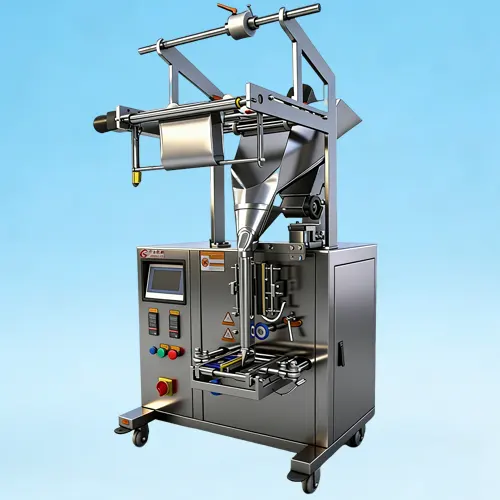
In the food and beverage line, the mixer is one stage in a sequence that keeps the product sealed from intake to packed bag.
Consistency builds trust — trust builds brands
Your customers never see the equipment that makes their food, but they taste the result every time. A quality ribbon mixer is not just a purchase; it is an investment in product quality, production efficiency and, ultimately, customer satisfaction.
Planning a food powder line?
Send us the recipe type, batch size and pack format. We will confirm the mixer specification, the line layout and an indicative price.
Request a line quotation← Back to all solutions