Spice blends are sensitive products: aroma, colour and flavour depend on a precise distribution of ingredients that may differ dramatically in particle size, density and dosage. A well-designed process helps every packed unit reflect the intended recipe.
Understand the materials first
Fine powders, dried herbs, salt, sugar and oil carriers behave differently in a mixer. Before selection, document flowability, cohesion, volatile components, particle fragility and the way each ingredient enters the batch.
Use a controlled addition sequence
Major components establish the main bed. Low-dose or highly potent ingredients may be preblended before addition. Liquids, when included, require a spray method and timing that avoids wet spots or unwanted agglomeration.
Choose an appropriate mixer
Ribbon and paddle mixers can both serve spice applications, depending on batch volume, ingredient behaviour and required process intensity. Trials with real materials are the best way to confirm mixing time and product condition.
Keep the downstream path gentle
Use transfer and packing steps that limit segregation and preserve the finished blend. The discharge should be reliable and cleanable; intermediate hoppers should not create long, uncontrolled residence times.
Why Spice Powders Demand Specialized Mixing
The Challenge of Particle Diversity
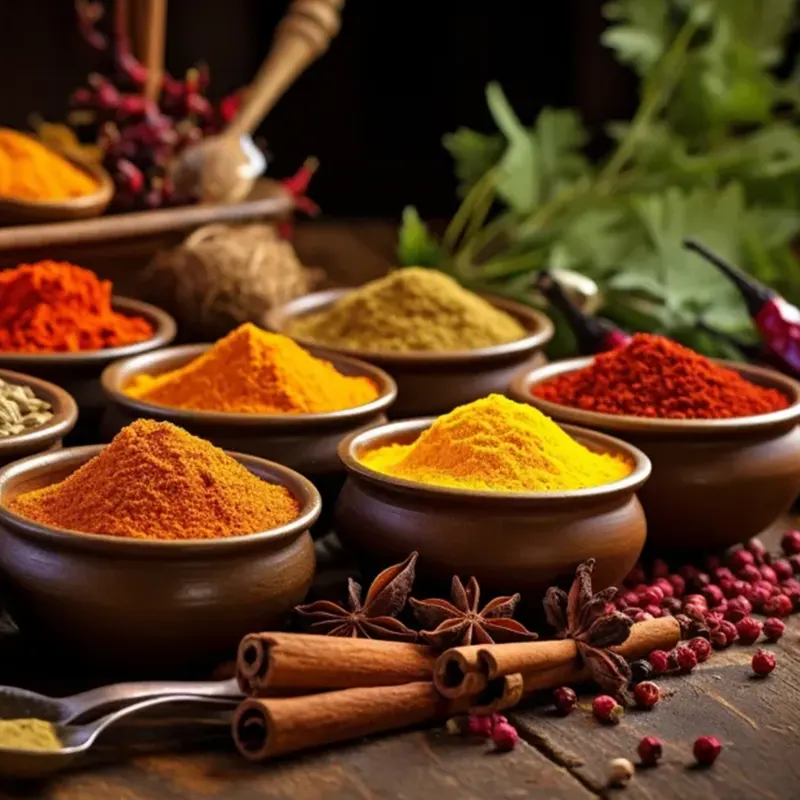
A blend may contain dense turmeric or cumin, light fibrous paprika or chili, oily nutmeg or sesame particles and starches that absorb moisture and clump. Different densities and flow behaviour encourage segregation, with denser particles settling and lighter materials rising; the result can be packages with inconsistent heat or aroma.
Clumping, Volatiles and Micro-Ingredients
Fine powders with natural oils or moisture can form agglomerates that trap flavour compounds, create visible defects and clog packing equipment. Essential oils and heat-sensitive aroma compounds can be diminished by excessive shear or temperature rise. Anti-caking agents, free-flow agents, flavour enhancers and colours are often added below one percent, yet need accurate distribution.
Engineered Solutions for Spice Powder Mixing
Ribbon Mixers: The Gentle Workhorse
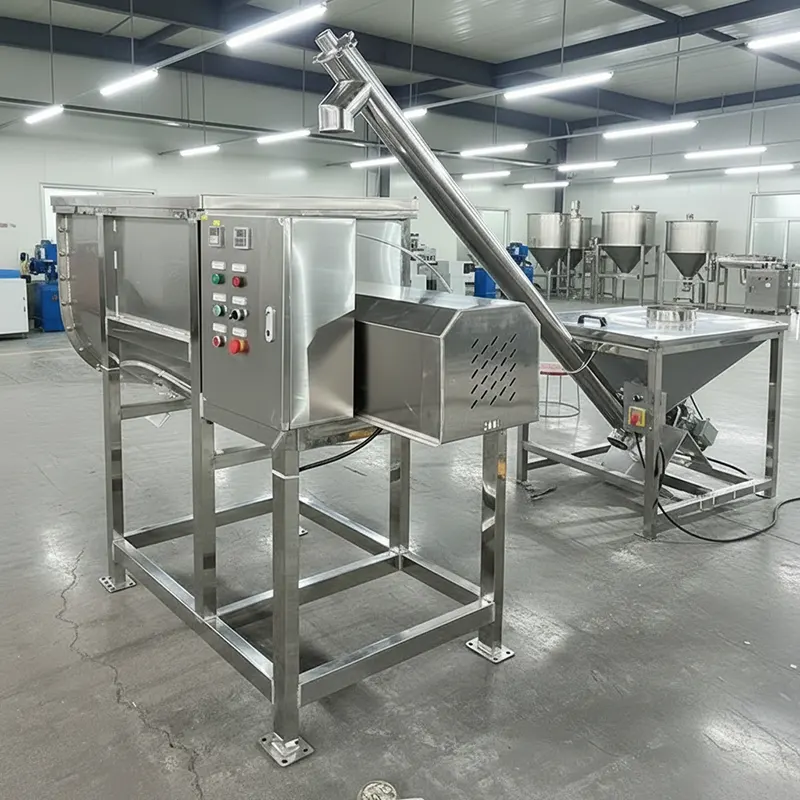
For straightforward dry blends, inner and outer ribbons rotate in opposing directions to continuously fold the material. This low-shear action supports volatile-oil preservation, batch uniformity, sanitary operation and scale-up from development units to production models. It is especially suited to simple spice blends, single-ingredient powders and premixing before later processing.
Complete Spice Processing Lines
A mixer is one part of an integrated spice process:
| Stage | Equipment | Function |
|---|---|---|
| Material Intake | Bag dump stations, bulk-bag dischargers | Dust-controlled emptying of raw materials |
| Conveying | Vacuum conveyors, mechanical lifts | Dust-free transfer with less particle segregation |
| Screening | Vibratory sifters, magnetic separators | Remove contaminants before mixing |
| Mixing | Ribbon or plough-shear mixer | Core blending operation |
| Post-Mix Handling | Surge hoppers, intermediate bulk containers | Buffer storage and flexible distribution |
| Packaging | Automatic bag fillers, VFFS machines | Accurate filling, sealing and date coding |
| Dust Control | Centralized collection systems | Clean air and a safer workplace |
- Enclosed material flow helps avoid cross-contamination between blends.
- Recipe-capable controls maintain batch parameters and traceability.
- Quick-change features support frequent product switches.
Why Spice Processors Choose Us
Flavour Protection by Design
The process should minimize temperature rise, damaging shear and exposure to air that can oxidize volatile compounds.
Sanitary Engineering for Clean Changeovers
Appropriate contact construction, polished surfaces, radiused corners, accessible shafts and seals, and clean-in-place options help prevent flavour carryover between products such as chili and cinnamon.
Uniformity and Scale-Up
Statistical sampling, active-ingredient assays and visual checks should verify low-dose distribution. Matching process geometry between development and production enables controlled scale-up.
Spice powders are the foundation of customers’ culinary experiences. The appropriate mixing system helps every package deliver the intended flavour, aroma and consistency.
Need a Spice-Blending Configuration?
Share the recipe type, capacity and sanitation requirements for a practical discussion.
Request a Consultation